

What Tells The Actual Gene Make Up What Tells The Actual Gene Makeup
Genes are segments of deoxyribonucleic acid (DNA) that contain the code for a specific protein that functions in i or more types of cells in the trunk. Chromosomes are structures within cells that comprise a person's genes.
-
Genes are contained in chromosomes, which are in the cell nucleus.
-
A chromosome contains hundreds to thousands of genes.
-
Every normal man jail cell contains 23 pairs of chromosomes, for a full of 46 chromosomes.
-
A trait is whatsoever gene-adamant characteristic and is ofttimes determined by more ane factor.
-
Some traits are caused by mutated genes that are inherited or that are the outcome of a new factor mutation.
Proteins are probably the virtually important class of material in the body. Proteins are not simply edifice blocks for muscles, connective tissues, skin, and other structures. They likewise are needed to make enzymes. Enzymes are complex proteins that control and comport out almost all chemic processes and reactions inside the body. The torso produces thousands of dissimilar enzymes. Thus, the unabridged construction and role of the body is governed past the types and amounts of proteins the body synthesizes. Protein synthesis is controlled past genes, which are contained on chromosomes.
The genotype (or genome) is a person's unique combination of genes or genetic makeup. Thus, the genotype is a complete set of instructions on how that person's body synthesizes proteins and thus how that trunk is supposed to be built and function.
The phenotype is the actual structure and function of a person'due south body. The phenotype is how the genotype manifests in a person—non all the instructions in the genotype may exist carried out (or expressed). Whether and how a gene is expressed is determined not simply past the genotype simply also by the environment (including illnesses and nutrition) and other factors, some of which are unknown.
A karyotype is a moving-picture show of the full gear up of chromosomes in a person'due south cells.
Humans have nearly 20,000 to 23,000 genes.
Structure of Dna
Deoxyribonucleic acid (dna) is the cell'south genetic material, independent in chromosomes within the jail cell nucleus and mitochondria.
Except for certain cells (for example, sperm and egg cells and red claret cells), the prison cell nucleus contains 23 pairs of chromosomes. A chromosome contains many genes. A gene is a segment of DNA that provides the code to construct a protein.
The Deoxyribonucleic acid molecule is a long, coiled double helix that resembles a screw staircase. In it, two strands, equanimous of saccharide (deoxyribose) and phosphate molecules, are connected by pairs of 4 molecules chosen bases, which form the steps of the staircase. In the steps, adenine is paired with thymine and guanine is paired with cytosine. Each pair of bases is held together by a hydrogen bond. A gene consists of a sequence of bases. Sequences of 3 bases code for an amino acid (amino acids are the building blocks of proteins) or other information.
Proteins are composed of a long chain of amino acids linked together one after another. There are twenty different amino acids that tin be used in protein synthesis—some must come from the diet (essential amino acids), and some are made past enzymes in the trunk. As a chain of amino acids is put together, it folds upon itself to create a circuitous three-dimensional construction. It is the shape of the folded structure that determines its function in the torso. Because the folding is determined by the precise sequence of amino acids, each different sequence results in a unlike protein. Some proteins (such equally hemoglobin) contain several different folded chains. Instructions for synthesizing proteins are coded inside the DNA.
Information is coded inside DNA by the sequence in which the bases (A, T, G, and C) are arranged. The lawmaking is written in triplets. That is, the bases are arranged in groups of three. Particular sequences of three bases in Deoxyribonucleic acid code for specific instructions, such as the addition of one amino acid to a chain. For example, GCT (guanine, cytosine, thymine) codes for the improver of the amino acrid alanine, and GTT (guanine, thymine, thymine) codes for the improver of the amino acid valine. Thus, the sequence of amino acids in a poly peptide is adamant by the order of triplet base pairs in the gene for that protein on the Dna molecule. The process of turning coded genetic information into a protein involves transcription and translation.
Transcription is the process in which data coded in DNA is transferred (transcribed) to ribonucleic acid (RNA). RNA is a long concatenation of bases merely like a strand of Deoxyribonucleic acid, except that the base uracil (U) replaces the base thymine (T). Thus, RNA contains triplet-coded information just similar DNA.
When transcription is initiated, part of the DNA double helix opens and unwinds. 1 of the unwound strands of DNA acts as a template against which a complementary strand of RNA forms. The complementary strand of RNA is called messenger RNA (mRNA). The mRNA separates from the DNA, leaves the nucleus, and travels into the cell cytoplasm (the function of the jail cell outside the nucleus—encounter figure ). At that place, the mRNA attaches to a ribosome, which is a tiny construction in the cell where protein synthesis occurs.
With translation, the mRNA code (from the DNA) tells the ribosome the order and type of amino acids to link together. The amino acids are brought to the ribosome by a much smaller type of RNA called transfer RNA (tRNA). Each molecule of tRNA brings one amino acid to be incorporated into the growing concatenation of poly peptide, which is folded into a complex 3-dimensional construction under the influence of nearby molecules called chaperone molecules.
There are many types of cells in a person'south trunk, such as heart cells, liver cells, and musculus cells. These cells look and human action differently and produce very different chemical substances. However, every cell is the descendant of a single fertilized egg cell and as such contains essentially the same DNA. Cells acquire their very unlike appearances and functions because dissimilar genes are expressed in different cells (and at dissimilar times in the same cell). The information about when a gene should be expressed is as well coded in the Deoxyribonucleic acid. Gene expression depends on the type of tissue, the age of the person, the presence of specific chemic signals, and numerous other factors and mechanisms. Noesis of these other factors and mechanisms that control factor expression is growing rapidly, only many of these factors and mechanisms are still poorly understood.
The mechanisms by which genes control each other are very complicated. Genes have chemical markers to indicate where transcription should brainstorm and end. Various chemical substances (such every bit histones) in and around the Deoxyribonucleic acid cake or let transcription. Besides, a strand of RNA called antisense RNA can pair with a complementary strand of mRNA and block translation.
Cells reproduce by dividing in two. Because each new cell requires a consummate set of DNA molecules, the DNA molecules in the original cell must reproduce (replicate) themselves during cell sectionalization. Replication happens in a fashion like to transcription, except that the entire double-strand DNA molecule unwinds and splits in two. After splitting, bases on each strand bind to complementary bases (A with T, and Grand with C) floating nearby. When this process is consummate, ii identical double-strand DNA molecules exist.
To prevent mistakes during replication, cells have a "proofreading" function to help ensure that bases are paired properly. There are also chemic mechanisms to repair Deoxyribonucleic acid that was non copied properly. Notwithstanding, considering of the billions of base pairs involved in, and the complexity of, the protein synthesis process, mistakes may happen. Such mistakes may occur for numerous reasons (including exposure to radiation, drugs, or viruses) or for no credible reason. Minor variations in DNA are very common and occur in virtually people. Most variations exercise non affect subsequent copies of the gene. Mistakes that are duplicated in subsequent copies are chosen mutations.
Inherited mutations are those that may be passed on to offspring. Mutations tin be inherited but when they affect the reproductive cells (sperm or egg). Mutations that practise not bear upon reproductive cells affect the descendants of the mutated prison cell (for instance, becoming a cancer) simply are not passed on to offspring.
Mutations may exist unique to an individual or family, and about harmful mutations are rare. Mutations that get so common that they affect more than 1% of a population are called polymorphisms (for example, the homo blood types A, B, AB, and O). Most polymorphisms have lilliputian or no issue on the phenotype (the actual structure and function of a person'due south torso).
Mutations may involve small or large segments of Dna. Depending on its size and location, the mutation may take no apparent effect or it may change the amino acid sequence in a protein or subtract the amount of protein produced. If the protein has a different amino acid sequence, it may role differently or not at all. An absent or nonfunctioning protein is often harmful or fatal. For case, in phenylketonuria Phenylketonuria (PKU) Phenylketonuria is a disorder of amino acid metabolism that occurs in infants born without the ability to normally break down an amino acid called phenylalanine. Phenylalanine, which is toxic... read more , a mutation results in the deficiency or absence of the enzyme phenylalanine hydroxylase. This deficiency allows the amino acid phenylalanine (absorbed from the diet) to accumulate in the body, ultimately causing astringent intellectual disability. In rare cases, a mutation introduces a change that is advantageous. For example, in the example of the sickle cell gene, when a person inherits two copies of the abnormal gene, the person volition develop sickle cell disease Sickle Prison cell Illness Sickle cell disease is an inherited genetic abnormality of hemoglobin (the oxygen-conveying protein institute in red claret cells) characterized by sickle (crescent)-shaped red blood cells and chronic... read more 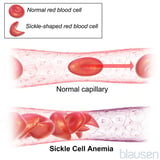 . However, when a person inherits just one copy of the sickle jail cell gene (called a carrier), the person develops some protection against malaria Malaria Malaria is infection of red blood cells with i of 5 species of Plasmodium, a protozoan. Malaria causes fever, chills, sweating, a general feeling of illness (malaise), and sometimes... read more (a blood infection). Although the protection confronting malaria can assist a carrier survive, sickle prison cell disease (in a person who has two copies of the gene) causes symptoms and complications that may shorten life span.
Natural selection refers to the concept that mutations that impair survival in a given surround are less likely to exist passed on to offspring (and thus become less common in the population), whereas mutations that ameliorate survival progressively become more common. Thus, beneficial mutations, although initially rare, eventually get common. The slow changes that occur over time caused past mutations and natural selection in an interbreeding population collectively are called evolution.
Except for certain cells (for example, sperm and egg cells or red claret cells), the nucleus of every normal human cell contains 23 pairs of chromosomes, for a total of 46 chromosomes. Normally, each pair consists of one chromosome from the mother and one from the father.
There are 22 pairs of nonsex (autosomal) chromosomes and i pair of sexual activity chromosomes. Paired nonsex chromosomes are, for practical purposes, identical in size, shape, and position and number of genes. Because each member of a pair of nonsex chromosomes contains one of each corresponding gene, there is in a sense a backup for the genes on those chromosomes.
The 23rd pair is the sexual activity chromosomes (X and Y).
The pair of sex activity chromosomes determines whether a fetus becomes male or female. Males accept one X and one Y chromosome. A male'southward Ten comes from his female parent and the Y comes from his father. Females accept ii Ten chromosomes, 1 from the mother and one from the male parent. In certain ways, sex chromosomes office differently than nonsex chromosomes.
The smaller Y chromosome carries the genes that determine male sex likewise as a few other genes. The X chromosome contains many more genes than the Y chromosome, many of which have functions besides determining sex and have no counterpart on the Y chromosome. In males, considering there is no second X chromosome, these extra genes on the 10 chromosome are not paired and about all of them are expressed. Genes on the X chromosome are referred to equally sex-linked, or X-linked, genes.
Normally, in the nonsex chromosomes, the genes on both of the pairs of chromosomes are capable of beingness fully expressed. However, in females, most of the genes on one of the two X chromosomes are turned off through a process called X inactivation (except in the eggs in the ovaries). X inactivation occurs early in the life of the fetus. In some cells, the Ten from the father becomes inactive, and in other cells, the 10 from the mother becomes inactive. Thus, ane prison cell may have a gene from the person'southward mother and another prison cell has the gene from the person's father. Because of X inactivation, the absenteeism of one Ten chromosome usually results in relatively minor abnormalities (such as Turner syndrome Turner Syndrome Turner syndrome is a sex chromosome abnormality in which girls are born with one of their two X chromosomes partially or completely missing. Turner syndrome is acquired past the deletion of part... read more than 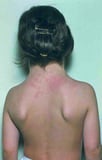 ). Thus, missing an X chromosome is far less harmful than missing a nonsex chromosome (see Overview of Sex Chromosome Abnormalities Overview of Sex Chromosome Abnormalities Sex chromosome abnormalities may be acquired by full or partial deletions or duplications of sex chromosomes. Chromosomes are structures within cells that incorporate Deoxyribonucleic acid and many genes. A cistron is... read more ).
are tiny structures within cells that synthesize molecules used for free energy. Different other structures inside cells, each mitochondrion contains its own circular chromosome. This chromosome contains Deoxyribonucleic acid (mitochondrial DNA) that codes for some, but non all, of the proteins that make up that mitochondrion. Mitochondrial DNA usually comes simply from the person's mother because, in full general, when an egg is fertilized, only mitochondria from the egg get function of the developing embryo. Mitochondria from the sperm usually do not become function of the developing embryo.
A trait is whatever gene-adamant characteristic. Many traits are adamant by the function of more than than one gene. For example, a person's acme is likely to be adamant past many genes, including those affecting growth, ambition, muscle mass, and activity level. However, some traits are determined by the part of a unmarried gene.
Variation in some traits, such equally centre color or blood type, is considered normal. Other variations, such as albinism Albinism Albinism is a rare hereditary disorder in which little or none of the skin pigment melanin is formed. The pare, pilus, and eyes, or sometimes just the eyes, are afflicted. Typically, the hair... read more 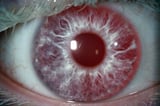 , Marfan syndrome Marfan Syndrome Marfan syndrome is a rare hereditary disorder of connective tissue, resulting in abnormalities of the eyes, basic, centre, blood vessels, lungs, and central nervous system. This syndrome is caused... read more
 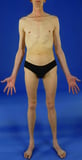 , and Huntington disease Huntington Illness Huntington disease is a hereditary disease that begins with occasional involuntary jerking or spasms, then progresses to more pronounced involuntary movements (chorea and athetosis), mental... read more , damage body construction or function and are considered disorders. However, non all such gene abnormalities are uniformly harmful. For example, ane re-create of the sickle cell gene tin can provide protection against malaria, just two copies of the gene cause sickle cell anemia.
A genetic disorder is a detrimental trait caused by an abnormal factor. The aberrant cistron may be inherited or may arise spontaneously as a outcome of a new mutation. Gene abnormalities are fairly common. Every humans carries an boilerplate of 100 to 400 abnormal genes (dissimilar ones in different people). Nevertheless, almost of the time the corresponding factor on the other chromosome in the pair is normal and prevents any harmful furnishings. In the general population, the gamble of a person having two copies of the same aberrant cistron (and hence a disorder) is very small. However, in children who are offspring of close blood relatives, the chances are college. Chances are also higher among children of parents who take married within an isolated population, such every bit the Amish or Mennonites.

What Tells The Actual Gene Make Up What Tells The Actual Gene Makeup,
Source: https://www.msdmanuals.com/home/fundamentals/genetics/genes-and-chromosomes
Posted by: jonesnuse1961.blogspot.com
0 Response to "What Tells The Actual Gene Make Up What Tells The Actual Gene Makeup"
Post a Comment